
Services
White Label App Development Services
Launch branded mobile applications with AwsQuality's white label app development services. We help businesses, agencies, and technology partners build, customize, and integrate mobile applications that can be offered under their own brand. From app development and branding to backend integration, testing, and ongoing support, we help turn your app ideas into market-ready solutions.
Launch Apps Under Your Brand with White Label App Development Services
Build and launch branded mobile applications without managing every aspect of development in-house. AwsQuality provides white label app development services to help businesses, agencies, and technology partners create, customize, and deliver applications under their own brand identity.
Whether you want to expand your service portfolio, introduce a new digital product, or offer mobile applications to your customers, our development team can help you plan and build solutions aligned with your business requirements.
From app design and development to backend integration, branding, testing, and deployment, we support the technical work behind your branded application.
Looking for a white label app development company for your next project?
Talk to Experts
White label app development services help businesses launch applications under their own brand by customizing an existing application foundation or developing a reusable solution. These services can include mobile app development, branding, backend development, integrations, testing, deployment, and ongoing maintenance.
What is White Label App Development?
White label app development is a software development approach in which an application is built or adapted so another business can brand, market, and offer it as its own product or service.
Instead of developing every application component independently, businesses can work with a white label app development company to customize an existing solution or develop a reusable application foundation that can be branded for different customers or business requirements.
The application can be customized with the business’s logo, colors, visual identity, features, and user experience. Depending on the project scope, it may also include backend services, APIs, administrative dashboards, and integrations with third-party systems.
For example, a digital agency may want to offer mobile app development to its clients without hiring and managing a complete in-house development team. It can partner with a white label app development company to handle the technical development while maintaining its own client relationships and brand identity.
Similarly, a business may want to launch a branded customer application using an existing application foundation that can be customized to match its operations.
White label app development can help businesses:
- Launch branded applications without building every component from scratch.
- Expand their digital product and service offerings.
- Reduce the internal development and resource management burden.
- Customize applications according to their brand identity.
- Integrate apps with existing business systems.
- Support multiple customers or business requirements through reusable components.
- Focus on customer relationships, product strategy, and business growth.
The goal is to create a branded application experience that aligns with your business model while keeping the underlying technology manageable and scalable.
White Label App Development vs. Custom App Development
White label app development and custom app development both help businesses build digital products, but they differ in their development approach, customization requirements, and potential implementation effort.
| Comparison Factor | White Label App Development | Custom App Development |
|---|---|---|
| Development approach | Uses an existing application foundation or reusable components, where suitable | Built around specific business requirements |
| Branding | Customized to reflect your brand | Designed specifically for your brand |
| Customization | Depends on the underlying architecture and agreed scope | Can be tailored extensively |
| Development effort | May be reduced when reusable components are suitable | Depends on the complexity of the requirements |
| Cost considerations | Can reduce development effort in suitable projects | Depends on the scope of custom development |
| Best suited for | Agencies, SaaS companies, resellers, and businesses seeking branded solutions | Businesses requiring highly specific functionality |
| Maintenance | Depends on the agreement and underlying application | Depends on the development and maintenance arrangement |
The right approach depends on your business model, functionality requirements, budget, and customization expectations. White label development may be suitable when reusable components can meet your requirements, while custom development offers greater flexibility when the application needs specialized functionality.
Our White Label App Development Services
AwsQuality helps businesses plan and develop branded application solutions based on their product requirements, target users, and technical environment. Our approach considers application functionality, user experience, backend architecture, integrations, branding, and long-term maintenance.
1. White Label App Consulting and Strategy
A successful white label application starts with a clear understanding of your business model and target audience. Before development begins, it is important to determine whether an existing application can be customized or whether a more tailored solution is required.
Our white label app consulting approach helps you evaluate your requirements, define the application scope, and identify a suitable development strategy.
Our consulting services can include:
- Business model and product requirement assessment
- White label app feasibility analysis
- Target audience and user journey evaluation
- Feature and functionality planning
- Existing application assessment
- Platform selection for iOS, Android, and web
- Branding and customization requirements
- Technical architecture planning
- Third-party integration assessment
- Development roadmap and project planning
We help prioritize features based on business requirements, implementation complexity, user expectations, and available resources.
The outcome: A clear application development strategy that aligns your product requirements with the right technical approach.
2. White Label Mobile App Development
Mobile applications help businesses deliver services, connect with customers, and support digital interactions through branded experiences.
Our white label mobile app development services help businesses create or customize applications for iOS and Android based on their requirements.
Depending on the project, the application may be developed using a reusable foundation or a more customized architecture.
Our mobile app development scope can include:
- iOS application development
- Android application development
- Cross-platform mobile app development
- Custom branding and interface development
- User registration and authentication
- User profile and account management
- Push notification integration
- Payment gateway integration
- API and backend connectivity
- Application testing and deployment preparation
We consider application performance, usability, device compatibility, security, and future maintenance during development.
The objective is to deliver a mobile application that reflects your brand while providing the functionality your customers or end users expect.
3. White Label App Customization and Branding
A white label application should look and feel like your own product. Branding goes beyond replacing an application logo. It involves creating a consistent experience across the application interface, user interactions, and related digital touchpoints.
Our white label app customization services help align the application with your brand identity and business requirements.
Customization activities may include:
- Logo and brand identity integration
- Color palette and typography customization
- Splash screen and application icon design
- Custom screen layouts and navigation
- UI and UX adjustments
- Content and label customization
- Feature configuration
- User role and permission customization
- Brand-specific application settings
- Custom onboarding and user flows
For businesses serving multiple customers, customization requirements may also include different branding configurations, feature availability, and application settings for individual clients.
We assess the required level of customization before development to maintain consistency without introducing unnecessary complexity.
The result is a branded application experience that aligns with your business identity and user expectations.
4. White Label Backend and Admin Panel Development
A mobile application often depends on backend services to manage user information, business operations, application data, and administrative activities.
An effective white label solution should consider the complete application environment, not just the customer-facing mobile interface.
Our backend and admin panel development services can support the functionality required to manage your application.
Depending on the project, backend and admin capabilities may include:
- User and account management
- Role-based access controls
- Application configuration
- Content and data management
- Product or service management
- Transaction and order management
- Dashboard and reporting
- Notification management
- User activity monitoring
- API management and integration
- Administrative workflows
The admin panel can be designed around your business processes and the level of control required by administrators.
For applications serving multiple businesses or customers, the backend architecture should also consider how data, user accounts, branding configurations, and permissions are separated.
We evaluate these requirements during solution design to support maintainability and future expansion.
5. White Label App Integration Services
A branded application often needs to communicate with other business systems to deliver a complete user experience.
For example, an e-commerce application may require payment processing, while a service booking application may need calendar, location, and notification integrations.
Our white label app integration services help connect applications with relevant third-party tools, APIs, and enterprise systems.
Integration requirements may include:
- Payment gateways and transaction services
- CRM and customer management platforms
- ERP and business management systems
- Authentication and identity services
- Cloud storage and database services
- Maps and location-based services
- Email and SMS platforms
- WhatsApp and communication services
- Analytics and reporting tools
- Inventory and order management systems
- Third-party APIs and web services
Before implementation, we assess API availability, authentication, data synchronization, security requirements, error handling, and system dependencies.
The objective is to establish reliable connections between your application and the systems required to support its business functionality.
6. White Label App Testing and Deployment
A branded application must be tested carefully before it is released to users. Functional issues, performance problems, device compatibility, or integration errors can affect the user experience and create additional maintenance work after launch.
Our testing and deployment approach focuses on validating the application against agreed requirements.
Testing and deployment activities can include:
- Functional testing
- UI and UX validation
- Cross-device and screen-size testing
- API and integration testing
- Authentication and permission testing
- Performance testing
- Security testing
- Regression testing
- Application build preparation
- Deployment planning
- App Store and Google Play submission assistance, where included in the project scope
App store publication requirements, developer accounts, content, privacy disclosures, and approval processes should be planned as part of the deployment strategy.
We help identify potential issues before release and prepare the application for the agreed deployment environment.
7. White Label App Maintenance and Support
Application development does not end when the app is launched. Mobile operating systems, third-party APIs, security requirements, and business processes change over time.
Ongoing maintenance helps keep your application functional, secure, and aligned with user expectations.
Our white label app maintenance and support services can include:
- Bug identification and resolution
- Application performance monitoring
- OS and framework compatibility updates
- Third-party API maintenance
- Dependency and library updates
- Security improvements
- Feature enhancements
- Backend and database maintenance
- Application version updates
- Technical documentation
- Ongoing development assistance
Support arrangements, response times, maintenance scope, and responsibilities can be defined according to your operational requirements.
Whether you need assistance with a newly launched application or ongoing technical support for an existing solution, we can help plan an appropriate maintenance approach.
White Label App Development Services and Deliverables
Here is an overview of the services and potential deliverables involved in a white label application project.
| Service | Key Deliverables |
|---|---|
| Consulting and Strategy | Requirement analysis, feasibility assessment, technical roadmap |
| Mobile App Development | iOS, Android, and cross-platform applications |
| App Customization and Branding | Logo, colors, UI/UX, screens, and feature configuration |
| Backend and Admin Panel | User management, dashboards, application configuration, and APIs |
| Integration Services | CRM, ERP, payment gateways, authentication, and third-party APIs |
| Testing and Deployment | Functional testing, performance testing, QA, and deployment assistance |
| Maintenance and Support | Bug fixes, updates, security improvements, and feature enhancements |
The actual deliverables depend on the application scope, technical requirements, and agreed engagement.
White Label App Solutions for Different Business Models
White label applications can support different business models, customer experiences, and industry requirements. The right application structure depends on how you plan to offer the product, manage users, and generate revenue.
White Label Apps for Agencies and Digital Service Providers
Agencies and digital service providers may want to expand their offerings by including branded mobile applications.
Building a complete in-house development team for every new service can require significant time and resources.
A white label development arrangement allows agencies to work with an external development team while maintaining their own customer relationships and service identity.
Potential use cases include:
- Branded mobile applications for agency clients
- Customer portals and business applications
- Booking and appointment applications
- E-commerce applications
- Service management applications
- Custom client-specific mobile solutions
- Ongoing application maintenance offerings
Business objective: Expand service capabilities and deliver mobile application projects without building every technical resource internally.
White Label Apps for SaaS Companies
SaaS businesses may want to extend their web-based products with branded mobile applications.
A mobile application can provide customers with convenient access to selected platform features and services.
Potential use cases include:
- Mobile companions for SaaS platforms
- Customer dashboards
- Account and subscription management
- Mobile reporting and analytics
- Workflow and task management
- User notifications and alerts
- Mobile access to platform data
Business objective: Extend an existing SaaS product’s accessibility and support a consistent experience across web and mobile platforms.
White Label Apps for Retail and E-commerce
Retailers and e-commerce businesses can use branded mobile applications to provide customers with convenient access to products, orders, and services.
Potential use cases include:
- Product catalogs and browsing
- Shopping carts and checkout
- Payment gateway integration
- Order tracking
- Customer accounts
- Loyalty and rewards programs
- Push notifications
- Personalized product experiences
Business objective: Create a branded shopping experience and provide customers with another convenient way to interact with the business.
White Label Apps for Healthcare and Wellness
Healthcare and wellness businesses may need applications that help users access services, manage appointments, and interact with relevant information.
Potential use cases include:
- Appointment scheduling
- Patient or member portals
- Health service information
- Consultation booking
- Notifications and reminders
- User profile management
- Integration with approved healthcare systems
Business objective: Support convenient digital interactions between healthcare organizations and their users.
Healthcare applications require particular attention to privacy, data protection, access control, and applicable regulatory requirements.
White Label Apps for Education and E-learning
Educational institutions, training providers, and learning businesses can use branded applications to provide access to learning resources and student services.
Potential use cases include:
- Course catalogs
- Student registration
- Learning content access
- Progress tracking
- Assessment and quiz functionality
- Notifications and announcements
- Payment integration
- Learning management system integration
Business objective: Extend learning experiences to mobile devices and make educational resources more accessible.
White Label Apps for On-Demand Services
Businesses offering delivery, booking, home services, or other on-demand services may require applications that connect customers, service providers, and administrators.
Potential use cases include:
- Service discovery and booking
- Customer and provider profiles
- Location and map integration
- Booking management
- Order or service status tracking
- Payments and transactions
- Ratings and feedback
- Admin dashboards
Business objective: Support service delivery through a connected application experience for customers and business operators.
The functionality, integrations, and architecture required for each use case depend on the business model and operational requirements.
Our White Label App Development Process
A structured development process helps keep the application aligned with business requirements, brand guidelines, and technical expectations.
Our approach focuses on understanding the product, defining the scope, developing the application, and validating it before deployment.
Step 1: Discovery and Requirements Assessment
We begin by understanding your business model, target users, application objectives, and expected functionality.
We also evaluate whether the project is best suited to an existing application foundation, a customized solution, or development based on specific requirements.
Deliverable: Documented requirements, initial scope, and project priorities.
Step 2: Solution Architecture and Design
Based on the agreed requirements, we define the application structure, platform approach, backend needs, integrations, and branding requirements.
The design phase focuses on user journeys, screen layouts, navigation, and brand consistency.
Deliverable: Proposed architecture, design direction, and development plan.
Step 3: Application Development and Customization
The development team works on the agreed application features, interface, backend components, and integrations.
Where a reusable application foundation is appropriate, it can be configured and extended based on the approved requirements.
Deliverable: Application components ready for testing.
Step 4: Branding and Integration
We apply the agreed brand identity and connect the application with the required backend services, APIs, and third-party systems.
We also validate relevant configuration, authentication, and data exchange requirements.
Deliverable: Branded application with the agreed integrations.
Step 5: Testing and Quality Assurance
The application is tested against the approved functional and technical requirements.
Testing covers user flows, device compatibility, integrations, permissions, and other relevant quality considerations.
Deliverable: Validated application build and issue-resolution report.
Step 6: Deployment and Handover
The application is prepared for deployment according to the agreed release plan.
Depending on the project scope, this may include build preparation, deployment assistance, store submission support, documentation, and knowledge transfer.
Deliverable: Deployment-ready application and agreed handover materials.
Step 7: Ongoing Support and Enhancement
After launch, the application can be maintained and improved as user feedback, business needs, and technology requirements evolve.
Deliverable: An ongoing maintenance and enhancement plan based on the agreed support scope.
Why Choose AwsQuality as Your White Label App Development Company?
Choosing a white label app development company is an important decision, particularly when the application will be offered to your customers under your brand.
You need a development partner that understands your product requirements, follows a structured development process, and can work behind the scenes while supporting your business objectives.
AwsQuality is a technology consulting and development company with capabilities across mobile app development, web development, Salesforce, AI, cloud, DevOps, and data engineering.
Our broader technology experience can support white label application projects that require more than mobile interface development.
Business-Focused Development Approach
We begin by understanding your business model, target users, and application objectives. This helps define a development scope that reflects your actual requirements.
Branding and Customization
We consider your brand identity, interface requirements, user journeys, and application functionality to create a consistent branded experience.
Mobile and Web Development Capabilities
Depending on your project, we can assess mobile and web application requirements and plan the appropriate development approach.
Backend and Integration Expertise
Applications often need to connect with existing business systems, databases, APIs, and cloud services. Our broader technology capabilities help support these integration requirements.
Scalable Solution Planning
We consider future functionality, user growth, integrations, and maintenance requirements while planning the application architecture.
Structured Development and Testing
Clear requirements, agreed deliverables, development reviews, and testing help keep the project aligned with the expected outcome.
Ongoing Technical Support
Your application may need enhancements, updates, and technical maintenance after launch. Support requirements can be defined according to your business and operational needs.
Whether you are an agency expanding your service portfolio, a SaaS company extending your product, or a business planning a branded mobile application, AwsQuality can help you assess the right development approach.
How to Choose the Right White Label App Development Company
Selecting the right white label app development company involves more than comparing development costs or delivery timelines. The partner you choose will influence application quality, customization flexibility, integration reliability, and ongoing maintenance.
Before making a decision, consider the following factors.
1. Relevant Development Experience
Evaluate the company’s experience with mobile applications, backend development, APIs, and the type of application you want to build.
Ask about projects with similar functionality, technical requirements, and user experiences.
2. Branding and Customization Capabilities
A white label app should reflect your business identity.
Confirm whether the development team can accommodate your branding requirements, interface preferences, application configurations, and customer-specific variations.
3. Technology and Architecture
Understand the technologies proposed for your application and how the architecture will support future updates, integrations, and user growth.
For multi-customer solutions, discuss how tenant configurations, user access, and data separation will be handled.
4. Integration Capabilities
Review the team’s experience with APIs, payment gateways, authentication services, databases, cloud platforms, and other systems relevant to your project.
Ask how integration errors, data synchronization, and third-party service dependencies will be managed.
5. Security and Data Protection
Discuss authentication, authorization, encryption, secure API communication, data storage, and relevant compliance requirements.
If your application processes sensitive information, make sure security and privacy requirements are included in the project scope.
6. Source Code and Intellectual Property Terms
Clarify source code access, ownership or licensing, intellectual property rights, third-party dependencies, and reuse permissions in the development agreement.
Do not assume that every white label arrangement automatically includes complete source code ownership or unrestricted resale rights.
7. Testing and Quality Assurance
Ask how the application will be tested across devices, platforms, integrations, and user scenarios.
A structured QA process helps identify issues before the application reaches end users.
8. Maintenance and Post-Launch Support
Confirm who will handle bug fixes, OS compatibility updates, dependency upgrades, API changes, and future enhancements.
A clear support agreement can help prevent confusion after deployment.
9. Communication and Project Transparency
Look for a development partner that provides clear communication, progress updates, documentation, and defined escalation channels.
For agencies and resellers, also clarify whether the development partner will communicate directly with your end clients or work through your team.
The right partner should align with your business model, technical requirements, and expectations for long-term collaboration.
White Label App Development Cost Factors
The cost of white label app development depends on the application scope, customization requirements, technology choices, and delivery expectations. The following factors can influence the overall development effort and investment.
| Cost Factor | How It Influences Development Cost |
|---|---|
| Application complexity | More complex workflows and functionality require additional development effort |
| Platform selection | iOS, Android, web, or cross-platform requirements affect scope |
| Customization level | Extensive branding and feature changes may require additional work |
| Backend requirements | Custom dashboards, databases, and admin functionality add complexity |
| Third-party integrations | External APIs, payment gateways, and enterprise systems affect effort |
| Security requirements | Authentication, access controls, and compliance requirements influence implementation |
| Maintenance and support | Ongoing updates and enhancements affect long-term costs |
An application using an existing, suitable foundation may require less development effort than a solution involving extensive custom functionality. However, the actual cost can only be estimated after reviewing the requirements, technical dependencies, and expected deliverables.
Launch Your Branded Application with AwsQuality
A white label application can help your business expand its digital offerings, deliver branded customer experiences, and create new opportunities without managing every technical activity internally.
The right development approach depends on your business model, target audience, application functionality, branding requirements, and integration needs.
AwsQuality helps businesses assess application requirements and plan mobile and web development solutions aligned with their goals.
Whether you are an agency looking for a development partner, a SaaS company planning a mobile application, or a business preparing to launch a branded digital product, let’s discuss your requirements.
Talk to AwsQuality about your white label app development project.
FAQs
Frequently Asked Questions
Can’t find what you’re looking for? Ask our team.
What are white label app development services?
White label app development services involve building or customizing applications that another business can brand, market, and offer under its own identity. Services may include application development, branding, backend development, integrations, testing, deployment, and ongoing maintenance.
What does a white label app development company do?
A white label app development company helps businesses create branded applications by developing or adapting the required software. It can support application design, customization, mobile and backend development, integrations, quality assurance, and deployment based on the agreed project scope.
What is the difference between white label app development and custom app development?
Custom app development generally involves creating an application around a specific business’s requirements. White label app development focuses on creating or adapting an application that can be branded and offered by another business. White label projects may use reusable components or application foundations, while custom development may involve more functionality built specifically for one product or client.
Can I launch an app under my company’s brand?
Yes. A white label application can be customized with your company’s logo, colors, application name, visual design, and other agreed brand elements. Store listing details and publishing arrangements should also be planned according to the relevant app marketplace requirements.
Can a white label app be customized for different clients?
Yes, depending on how the application is designed. A reusable application architecture can support different branding configurations, features, user roles, or settings for different customers. The exact customization and multi-tenant requirements should be defined during solution planning.
Can white label applications be developed for both iOS and Android?
Yes. White label applications can be developed for iOS, Android, or both platforms. The appropriate approach may involve native or cross-platform development, depending on the required features, performance expectations, budget, and maintenance strategy.
Can a white label app integrate with existing business systems?
Yes. Depending on the available APIs and technical requirements, white label applications can integrate with CRM platforms, ERP systems, payment gateways, databases, authentication services, cloud platforms, and other third-party applications.
How much do white label app development services cost?
The cost depends on whether the project uses an existing application foundation or requires more extensive custom development. Other factors include the number of platforms, features, backend requirements, branding, integrations, security, testing, and maintenance. A detailed estimate should be prepared after reviewing the project requirements.
How long does it take to develop a white label app?
The timeline depends on application complexity, the level of customization, platform requirements, integrations, testing, and deployment needs. A solution based on an existing application foundation may require a different timeline from a custom application. A realistic delivery estimate should follow requirements assessment and scope definition.
Who owns the source code of a white label application?
Source code ownership depends on the contractual arrangement. Some projects include source code transfer, while others provide a license to use and customize the application. Businesses should clarify ownership, licensing, third-party components, and reuse rights in writing before development begins.
Do white label applications require ongoing maintenance?
Yes. Applications may need bug fixes, operating system compatibility updates, security improvements, dependency upgrades, API maintenance, and new features. Ongoing maintenance helps keep the application functional and aligned with changing business requirements.
Why should agencies partner with a white label app development company?
Agencies can use white label development partnerships to expand their service offerings without building every technical capability internally. The arrangement can allow them to retain their client relationships while working with an external team for development, testing, integrations, and maintenance.
Does AwsQuality provide white label app development services?
AwsQuality provides technology consulting and development services, including mobile and web application development. White label application requirements can be discussed with our team to assess the branding, development, integration, and delivery scope. The appropriate engagement depends on the application requirements and agreed project terms.
Case studies
Our Case Studies
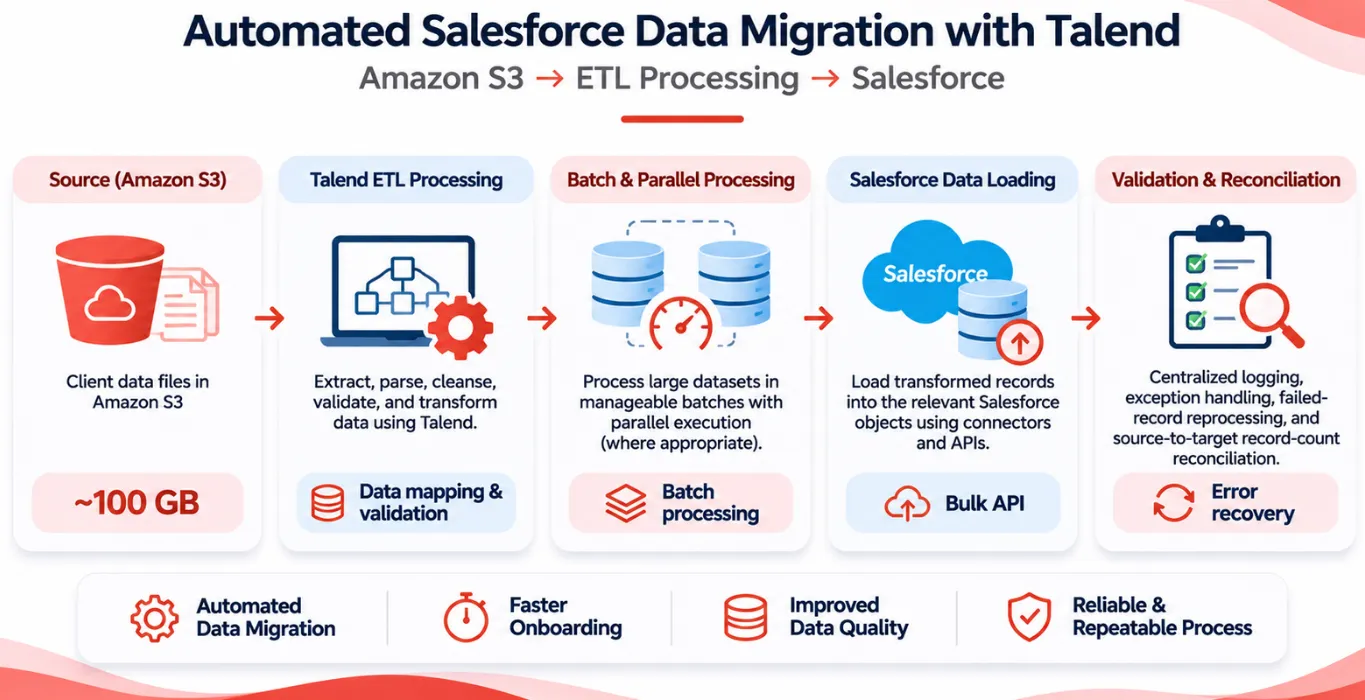 Other Automated Salesforce Data Migration from Amazon S3 Using Talend Project Overview A client onboarding initiative required migrating approximately 100 GB of data files stored in Amazon Simple… Read case study
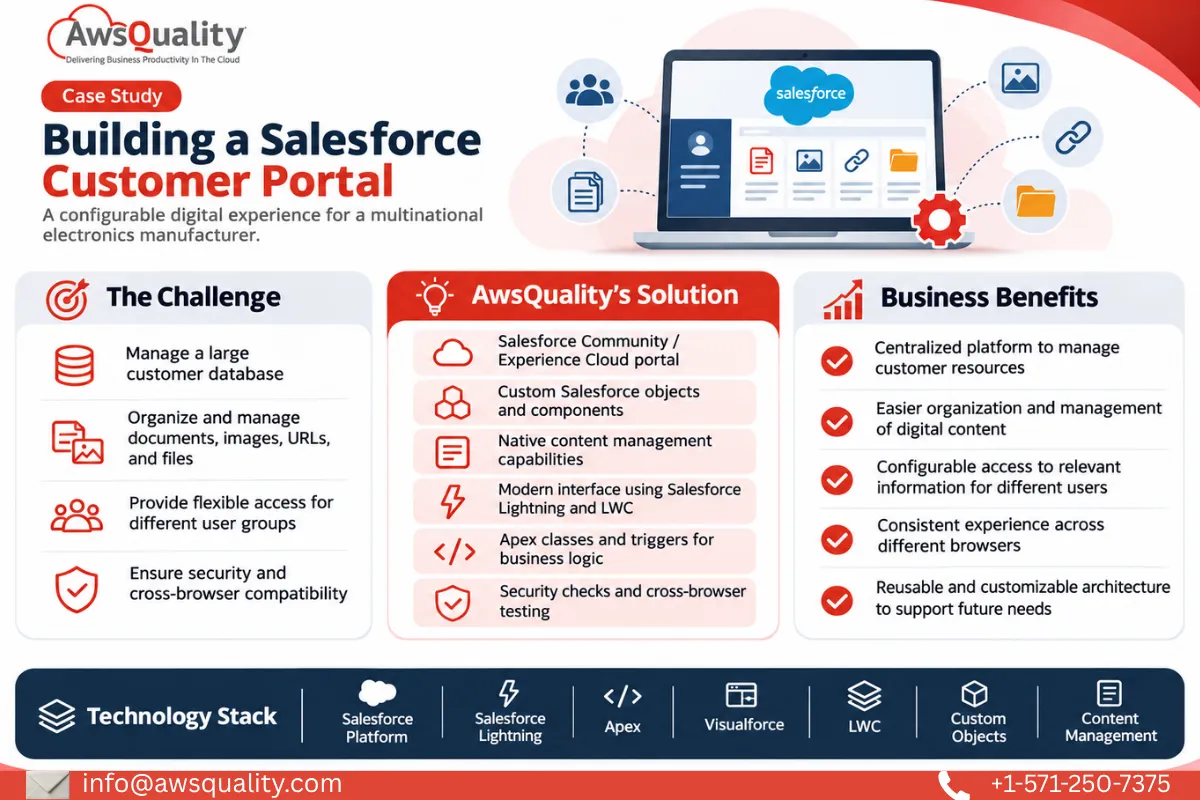 Electronics & Imaging Building a Salesforce Customer Portal (Experiance Cloud) for a Multinational Electronics Company Project Overview A multinational electronics manufacturer partnered with AwsQuality to develop a centralized, Salesforce-powered customer portal that could… Read case study
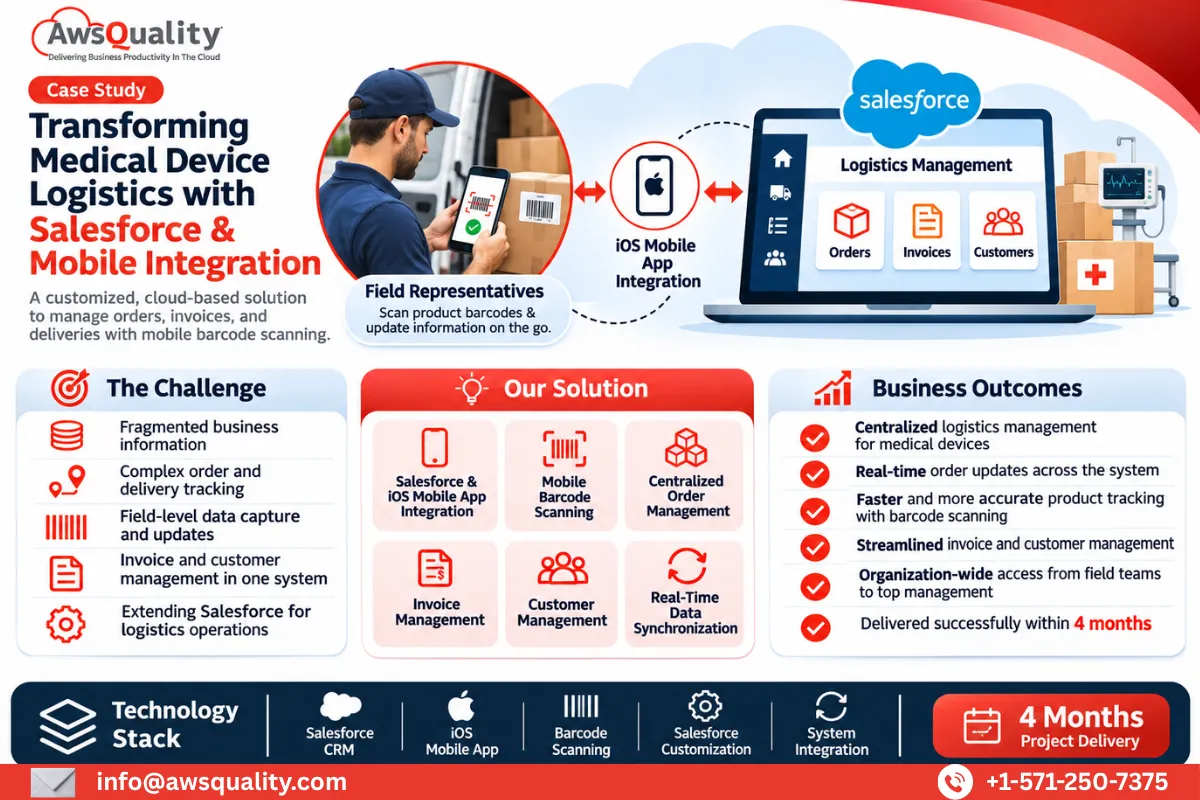 Healthcare Building an End-to-End Salesforce Logistics Management Solution for a Global Medical Devices Company Project Overview A global medical devices logistics company partnered with AwsQuality to develop a comprehensive, cloud-based solution for… Read case study
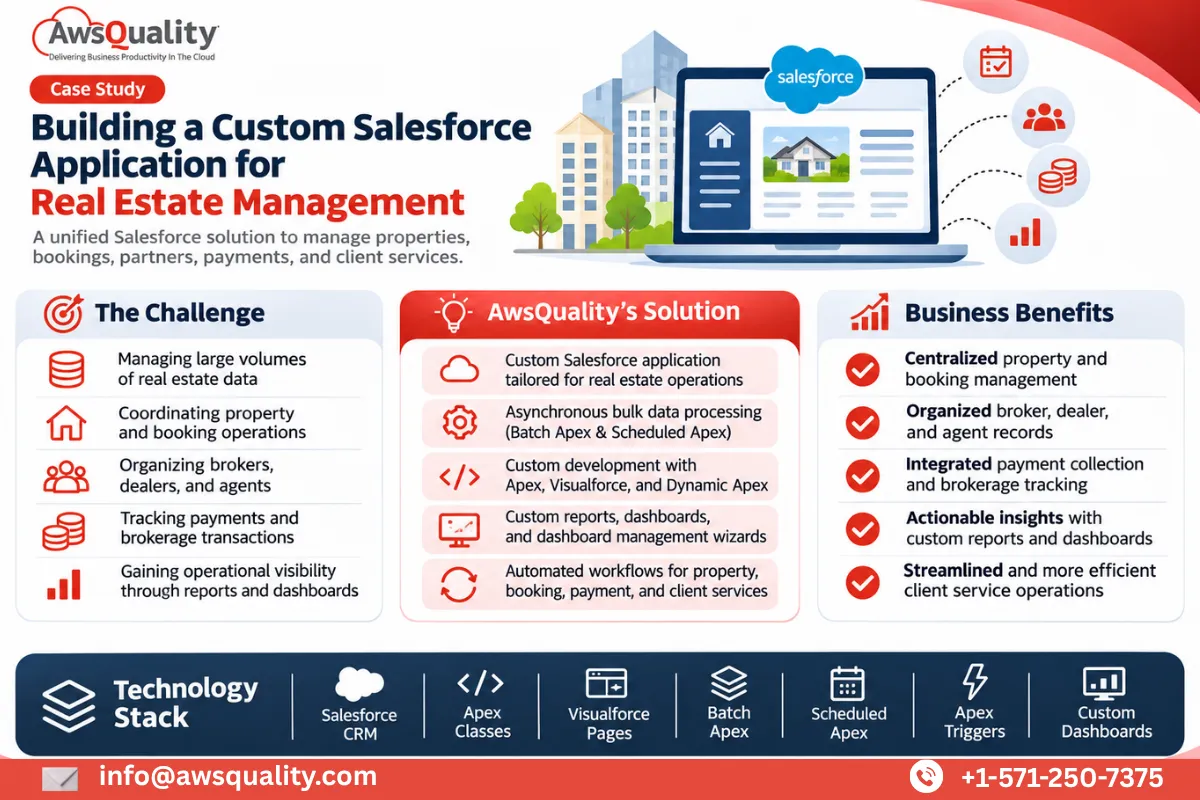 Real Estate Custom Salesforce Real Estate Application Development for Property Management Project Overview A Singapore-based IT services and cloud solutions company partnered with AwsQuality to develop a customized Salesforce… Read case study
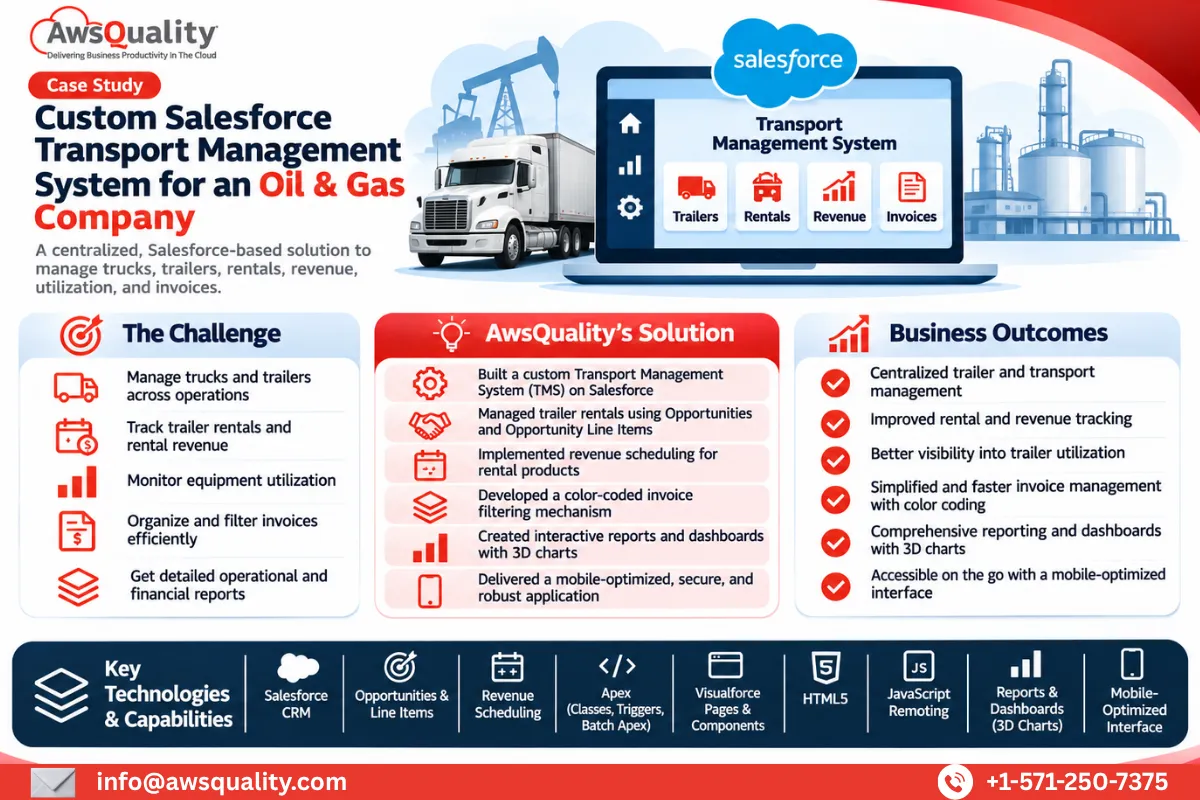 Manufacturing Custom Salesforce Transport Management System for a Wireline and Completion Solutions Company Project Overview A Texas-based oil and gas completion and production solutions company partnered with AwsQuality to develop a… Read case study
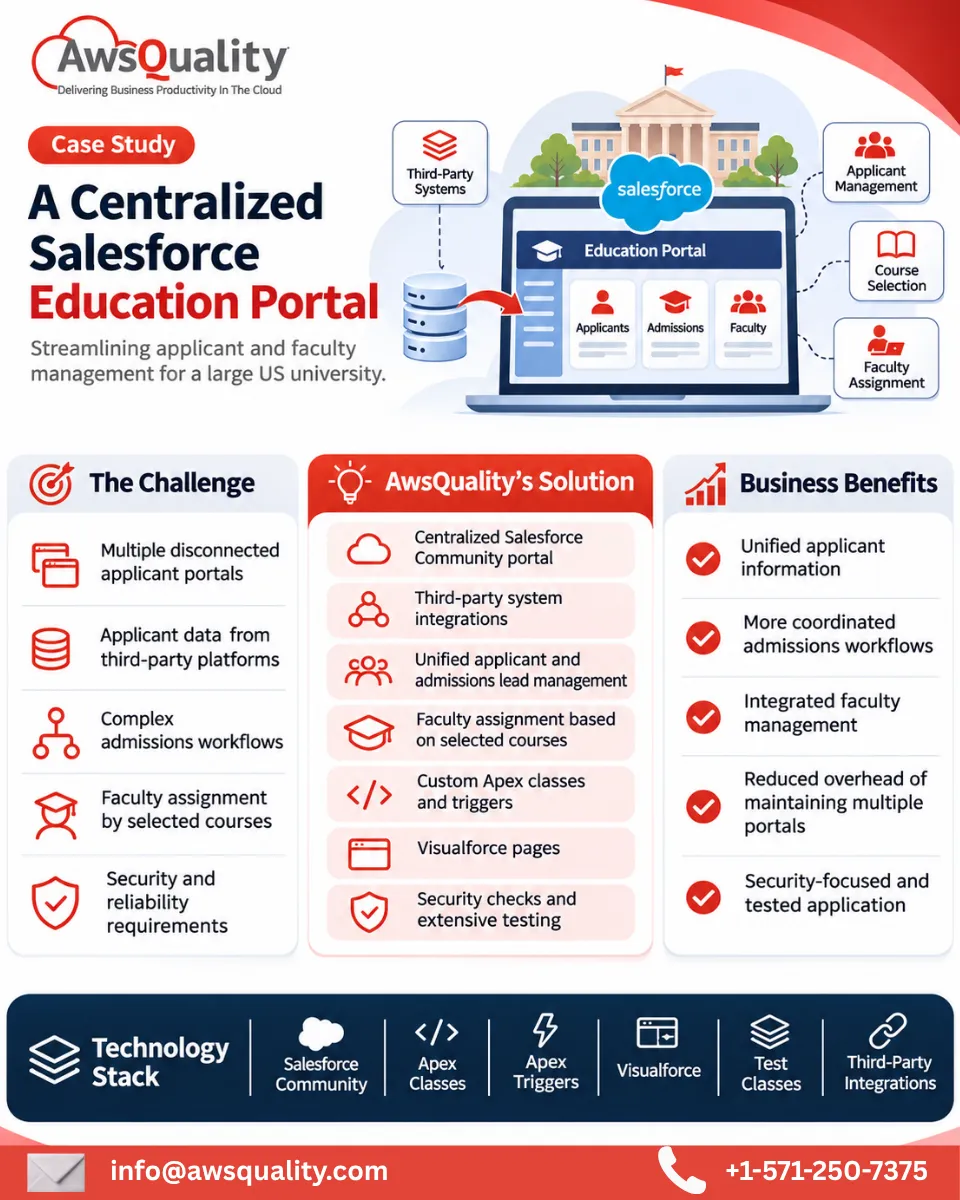 Education Developed Salesforce Community Portal for A USA Based University Read case study
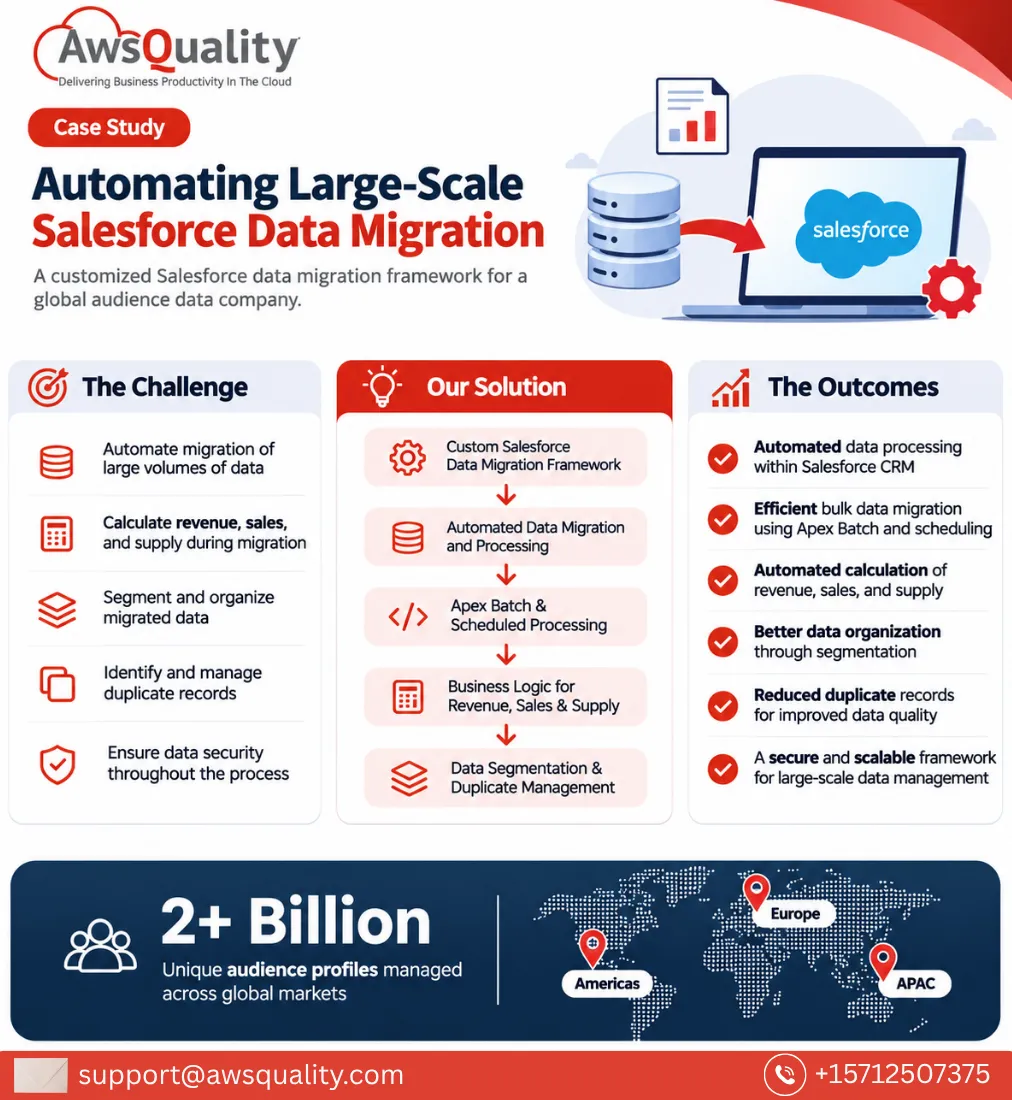 Other Developed Salesforce Data migration System for An Audience Company Project Overview A global audience data company partnered with AwsQuality to develop a robust Salesforce data migration framework… Read case study
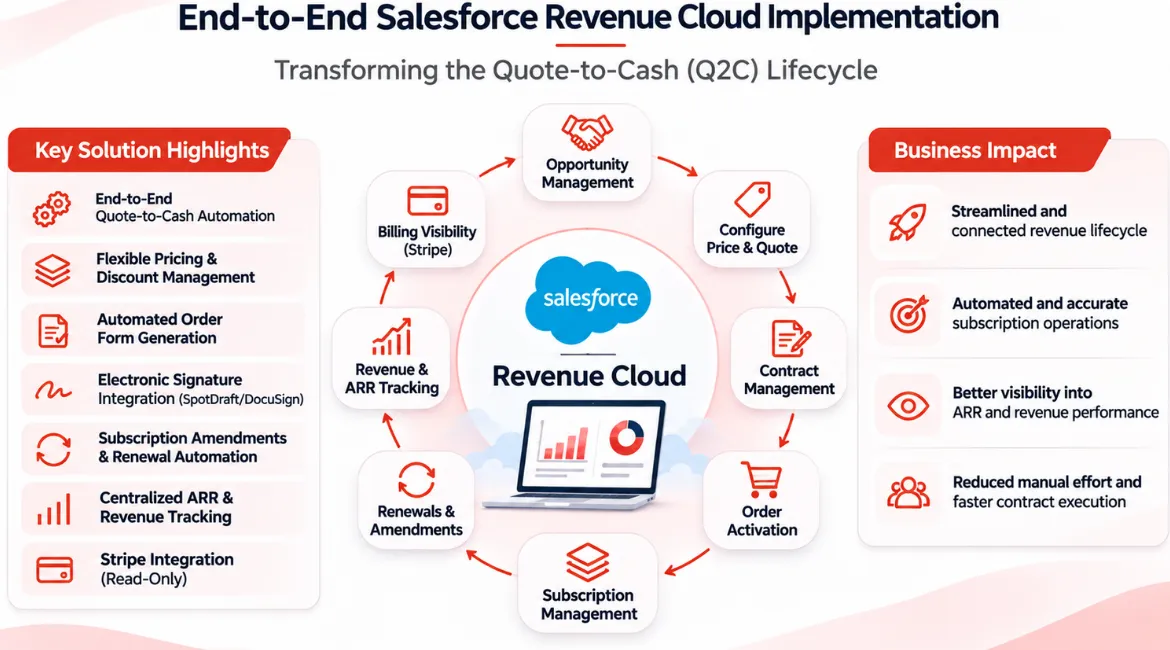 Other End-to-End Salesforce Revenue Cloud Implementation – Transforming the Quote-to-Cash Lifecycle Project Overview The client wanted to streamline its revenue management operations by bringing the entire Quote-to-Cash (Q2C) lifecycle… Read case study
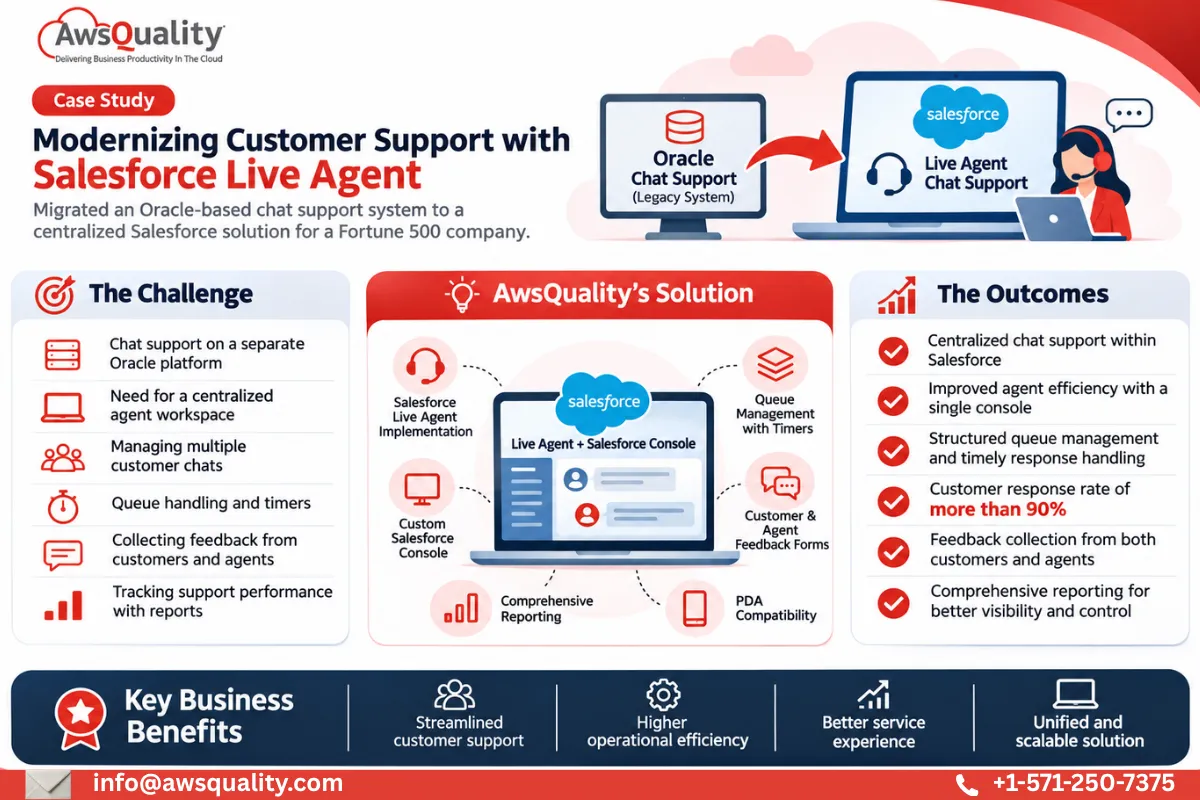 Other Implemented Salesforce Live Agent Chat Support for A Fortune 500 Company Project Overview A Fortune 500 company specializing in computer hardware and electronics partnered with AwsQuality to modernize its… Read case study
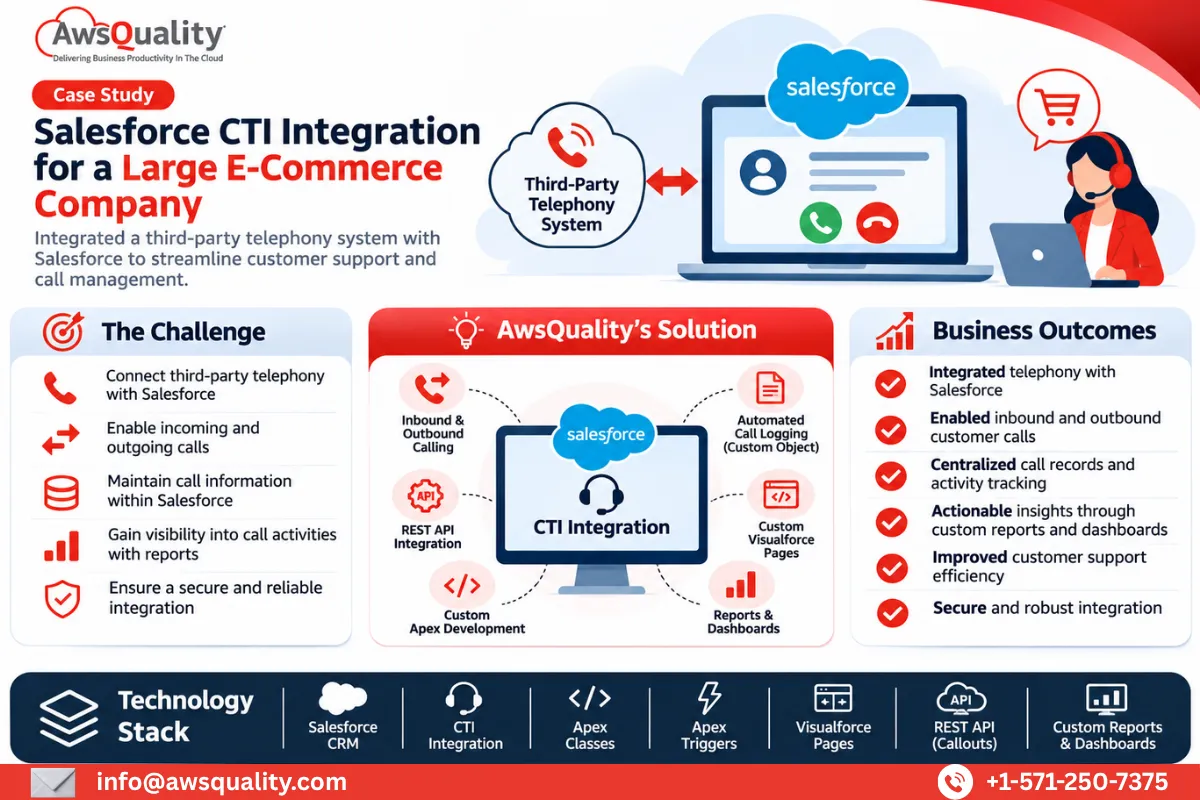 Retail & E-Commerce Salesforce CTI Integration for A large E-commerce Company Project Overview An international e-commerce company partnered with AwsQuality to integrate its third-party telephony system with Salesforce and… Read case study
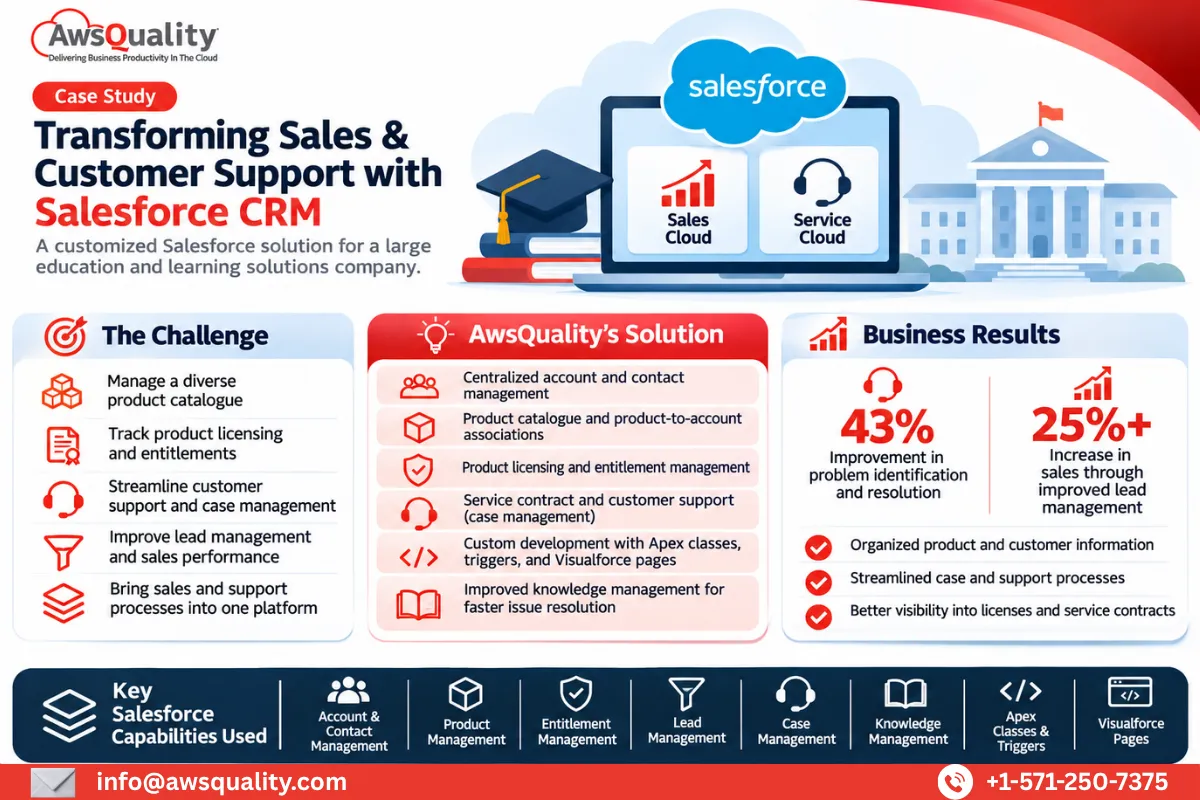 Education Salesforce Implementation for a Large Education and Learning Solutions Company Project Overview A large education and learning solutions provider partnered with AwsQuality to develop a comprehensive Salesforce-based solution… Read case study
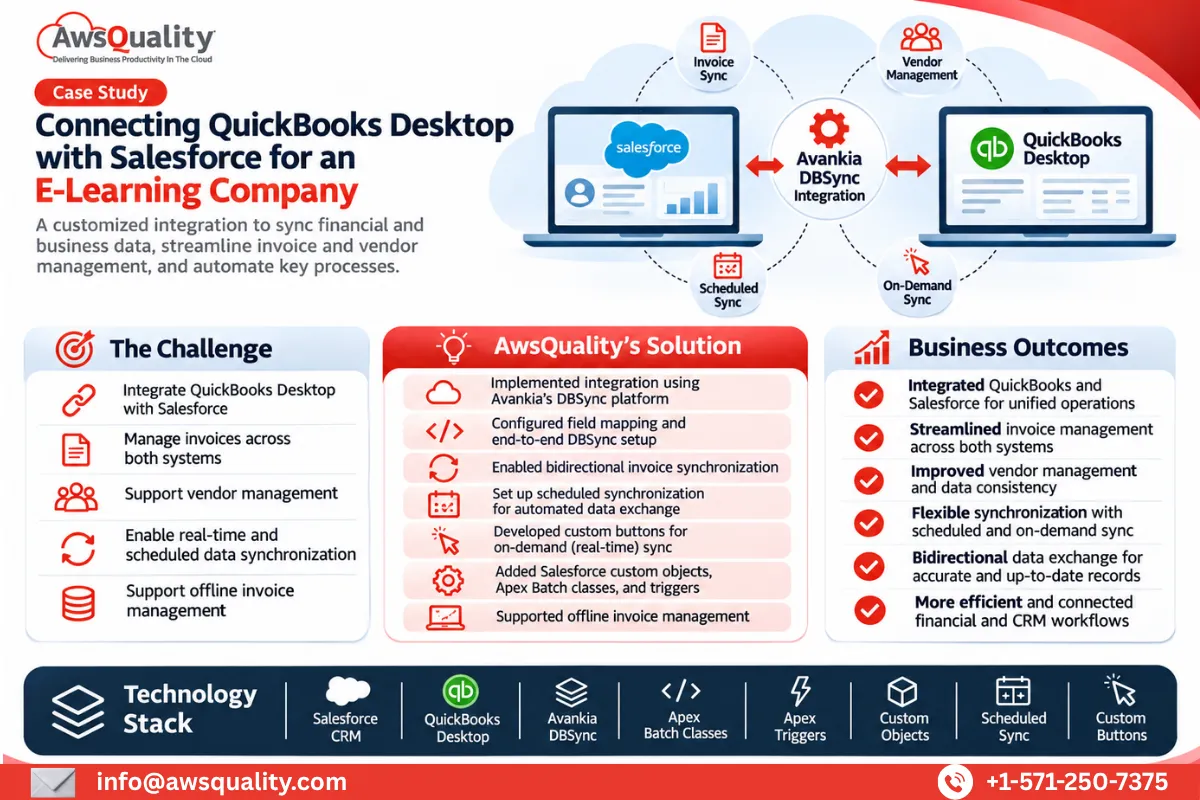 Financial Services Salesforce QuickBooks Integration for an E-learning Giant Project Overview A Texas-based e-learning company partnered with AwsQuality to integrate QuickBooks Desktop with Salesforce CRM and simplify… Read case study
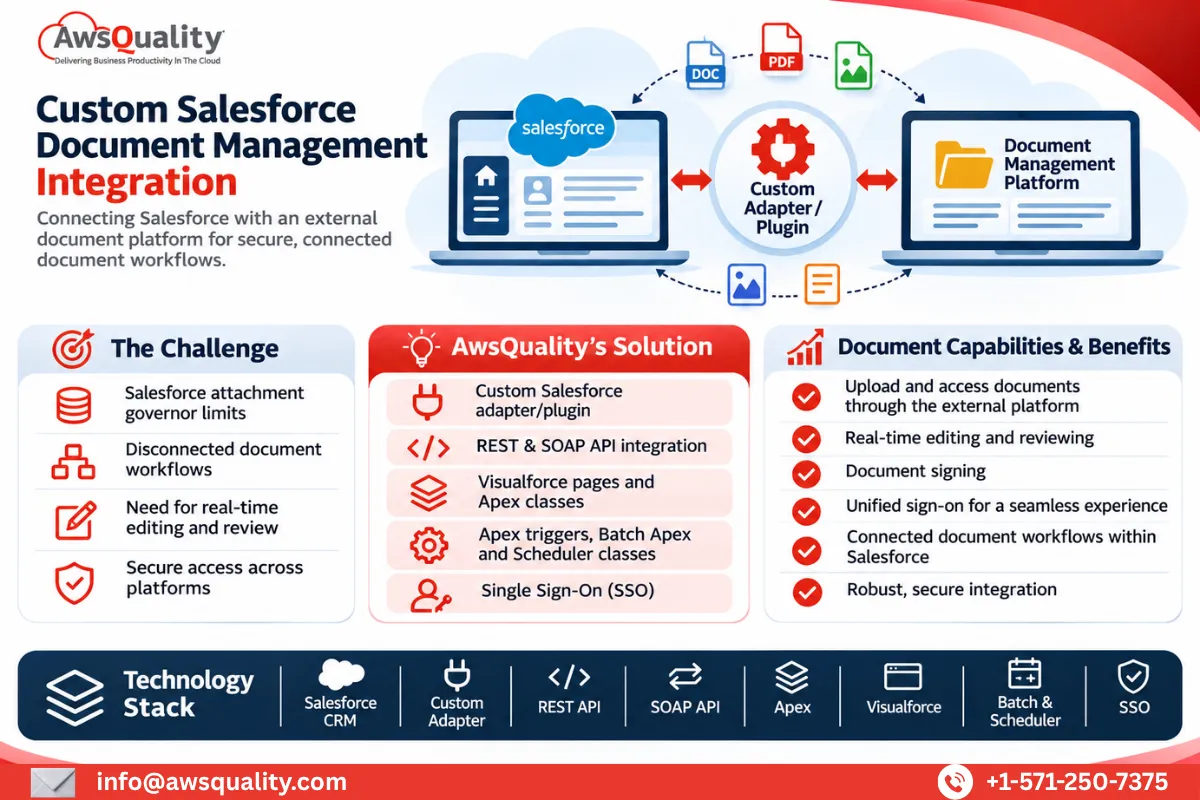 Other Salesforce Services for Document Management Company Project Overview A San Francisco-based document productivity company partnered with AwsQuality to integrate its document management platform with… Read case study