
The global mobile app market is booming. With billions of smartphone users across the world and app stores hosting millions of applications, the demand for high-quality mobile apps has never been greater. Whether you are a startup with a disruptive idea or an established enterprise looking to extend your digital reach, choosing the right mobile application development company is one of the most consequential decisions you will make.
The stakes are high. A poorly chosen development partner can drain your budget, miss deadlines, deliver a buggy product, and ultimately cost you your competitive edge. On the other hand, the right company becomes a true strategic partner — one that transforms your vision into a polished, high-performing app that delights users and drives real business outcomes.
But how do you separate the genuinely capable agencies from the ones that simply look good on paper? Here are five unmistakable signs that you've found the right mobile application development company.
Sign 1: They Have a Strong, Verifiable Portfolio and Relevant Experience
The first thing any reputable mobile app development company should be able to show you is proof of work. A strong portfolio is not just a gallery of attractive screenshots — it is evidence of technical competence, design sensibility, industry knowledge, and the ability to take a project from concept to completion.
When reviewing a company's portfolio, look beyond the surface aesthetics. Examine whether they have built apps in your industry or for your target audience. A company that has developed healthcare apps, for instance, will already understand HIPAA compliance, patient data privacy, and the UX nuances specific to medical users. That domain knowledge is enormously valuable and cannot be easily faked.
Go further by checking whether the apps in their portfolio are actually live and well-rated on the App Store or Google Play. Download a few of them. Notice how fast they load, how intuitive the navigation feels, and whether they crash or behave erratically. Real-world performance is the ultimate test of a development team's capabilities.
Beyond the portfolio itself, look for verifiable client testimonials, case studies, and references. A company confident in its work will happily connect you with past clients who can speak honestly about the experience — communication style, responsiveness, adherence to timelines, and quality of the final deliverable. If a company is evasive about references, consider that a red flag.
Read: Mobile App Development Guide - Trends, Technologies & Strategy
Sign 2: They Prioritize Discovery and Ask the Right Questions
One of the clearest indicators of a professional mobile app development company is the quality of the questions they ask you before writing a single line of code. Inexperienced or opportunistic companies will rush to give you a quote and start development as quickly as possible. Exceptional companies do the opposite — they slow down at the beginning to ensure they fully understand your goals, your users, and your business context.
A thorough discovery phase might include workshops, stakeholder interviews, user research, competitive analysis, and the creation of detailed wireframes or prototypes. The company should want to understand not just what you want to build, but why you are building it and who it is for. Questions like "Who is your target user and what problem are you solving for them?" or "What does success look like six months after launch?" signal that a company is thinking strategically, not just executing tasks.
This discovery-first approach also protects you financially. Misunderstandings caught during the discovery phase cost almost nothing to fix. The same misunderstandings caught after six months of development can cost tens of thousands of dollars and significant time. A company that invests seriously in discovery is a company that respects your resources and is committed to building the right product, not just any product.
Sign 3: They Are Transparent About Their Process, Timeline, and Pricing
Trust is the foundation of any successful development partnership, and transparency is how trust is built. The right mobile app development company will be refreshingly clear about how they work, what they will deliver, when they will deliver it, and how much it will cost.
In terms of process, look for companies that follow a structured methodology — whether that is Agile, Scrum, or a well-defined proprietary framework. They should be able to walk you through each phase of development: discovery, design, development, testing, launch, and post-launch support. You should never feel like you are handing over your idea and hoping for the best.
Regarding timelines, a credible company will give you a realistic project schedule with clear milestones rather than vague promises. They will also be upfront about the factors that could affect the timeline — scope changes, third-party API dependencies, app store review times — and have a plan for managing those variables.
On pricing, transparency means itemized proposals, not suspiciously round numbers. You should be able to see what you are paying for at each stage of the project. Some companies charge a fixed price for the entire project, others work on a time-and-materials basis. Both models can work well, but the key is that the company explains clearly how they arrived at the numbers, what is included, and what would constitute a change in scope that affects the budget.
Beware of companies that give you the lowest quote just to win the contract, then pile on change requests later. A trustworthy partner would rather lose a deal than win it by being dishonest.
Sign 4: They Have Expertise Across the Full Development Lifecycle — Including Post-Launch
Building a mobile app does not end at launch. In fact, in many ways, the real work begins after the app is in users' hands. The right development company understands this and offers robust capabilities across the entire product lifecycle — from initial concept through to ongoing maintenance, updates, and scaling.
Before launch, look for a company with strong quality assurance (QA) practices. App testing should be comprehensive, covering functionality, performance under load, security vulnerabilities, compatibility across different devices and operating system versions, and user experience. A company that treats testing as an afterthought will cost you in negative reviews and user churn.
After launch, you will inevitably need bug fixes, performance optimizations, and feature additions as your user base grows and feedback comes in. A development partner who disappears the moment they hand over the finished product is not truly a partner at all. Look for a company that offers structured post-launch support agreements and has a clear escalation process for critical issues.
Also consider whether the company helps you think about analytics and iteration. The best mobile apps are not built once and left unchanged — they evolve based on data. A development partner who helps you set up analytics from the start and works with you to interpret user behavior and improve the product over time is one worth keeping.
Sign 5: Communication Is Clear, Consistent, and Collaborative
Technical expertise matters enormously, but even the most skilled development team can become a nightmare to work with if communication breaks down. The right mobile application development company will make you feel like a valued collaborator throughout the entire project — never left in the dark, never speaking a language you don't understand.
Assess communication style from your very first interaction. Do they respond promptly to your inquiries? Do they explain technical concepts in plain language without being condescending? Do they listen carefully to your feedback and demonstrate that they have understood it? These early signals are highly predictive of how the relationship will function under the pressure of an actual project.
Ask specifically how they manage communication during development. What project management tools do they use — Jira, Trello, Asana? How frequently will you receive status updates? Will you have a dedicated project manager as your primary point of contact? How quickly do they respond to urgent issues? The answers to these questions reveal how seriously a company takes the client relationship.
Cultural and time zone alignment also matters, particularly if you are considering an offshore development partner. A company on the other side of the world is not automatically a bad choice, but you should have a frank conversation about overlapping working hours, response time expectations during critical phases, and how they handle time-sensitive communication.
Ultimately, you want a company that treats you as the expert on your business while positioning themselves as the expert on technology. The best partnerships are built on mutual respect, open dialogue, and a shared commitment to building something great.
Final Thoughts
Finding the right mobile application development company is not about finding the cheapest option or the one with the flashiest website. It is about finding a team that combines technical excellence with strategic thinking, honest communication, and genuine investment in your success.
When a company shows you a verifiable portfolio of work, asks thoughtful questions before writing code, operates with complete transparency, supports you through the entire app lifecycle, and communicates with clarity and respect — you have found a partner worth trusting with your vision. These five signs, taken together, are your clearest signal that you are in capable hands.
Take your time during the evaluation process. The decision you make now will shape your product, your budget, and your business trajectory for years to come.
FAQs
Q1. How do I evaluate a mobile app development company's portfolio effectively?
Look beyond visual design — download the live apps, check their App Store and Google Play ratings, read user reviews, and see if the company has experience in your specific industry. Ask for case studies that detail the problem, process, and measurable outcomes.
Q2. How much does it typically cost to hire a mobile application development company?
Costs vary widely depending on app complexity, platform (iOS, Android, or both), and the company's location. A simple app might start at $10,000–$25,000, while a complex enterprise-grade app can exceed $200,000. Always request an itemized proposal to understand exactly what you are paying for.
Q3. What questions should I ask a mobile app development company before signing a contract?
Key questions include: What is your development process? Who will own the source code after delivery? How do you handle scope changes? What does your post-launch support look like? Can you provide references from past clients?
Q4. How long does it take to develop a mobile app?
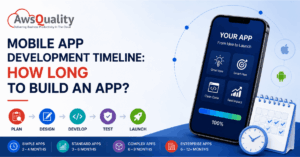
A basic app typically takes 3–6 months, while a feature-rich or enterprise app can take 9–18 months or more. Be cautious of any company that promises unusually fast delivery without a clear explanation of how they will maintain quality.
Q5. Should I choose a local development company or consider offshore options?
Both can work well. Local companies offer easier communication and cultural alignment, while offshore teams can be more cost-effective. The key factors are communication transparency, overlapping work hours, and a proven track record — regardless of location.
Q6. What is the difference between a fixed-price and a time-and-materials contract?
A fixed-price contract locks in the total cost upfront, which is good for well-defined projects. A time-and-materials model charges based on hours worked, offering more flexibility for evolving requirements. The right choice depends on how clearly defined your project scope is at the outset.
Q7. How do I know if a company's post-launch support is reliable?
Ask specifically what their support agreement includes — response times, bug fix timelines, update frequency, and pricing for ongoing maintenance. Check reviews and ask past clients about their experience with the company after the app went live.
Q8. Do I need to have a technical background to work with a mobile app development company?
No. A good development company will translate technical concepts into plain language and guide you through every decision. If a company makes you feel lost or overwhelmed without explaining things clearly, that is a sign they may not be the right fit.
 Bio
Bio